REVIEW · TOKYO
Tokyo – Shinjuku Nightlife: Happy Hour and Karaoke Fun
Book on Viator →Operated by Intrepid Urban Adventures - Japan · Bookable on Viator
Tokyo at night can feel like one long test. This tour turns it into a planned, friendly route through Shinjuku’s highlights. I especially like the mix of Hanazono Jinja Shrine under colored lights and the small-group pace that keeps you from wandering in the wrong direction.
You’ll get a local-style night out without the guesswork: you stop for snacks and drinks, then glide through areas like Golden Gai and Kabukicho before finishing with karaoke. One real consideration: smoking is allowed in the bars you visit, and there are no separate non-smoking areas.
In This Review
- Key things to know before you go
- Why Shinjuku Nights Feel Easier With a Guide
- Hanazono Jinja Shrine After Dark: Shinto in the Middle of Shinjuku
- Golden Gai’s Tiny Alleys: Where Nightlife Feels Personal
- Kabukicho’s Neon Chaos: Photo-Friendly Energy With a Plan
- Omoide Yokocho Snack Bars and Karaoke Nightcap
- Food, Drinks, and the Happy Hour Flow
- Price Worth It? What $129.55 Buys You in Real Terms
- Who This Tour Fits Best (and Who Should Think Twice)
- Smart Tips for Meeting, Night Walks, and Getting Through Shinjuku
- Should You Book Tokyo Shinjuku Nightlife Happy Hour and Karaoke Fun?
- FAQ
- How long is the Tokyo Shinjuku Nightlife tour?
- What time does the tour start?
- Where do I meet the guide?
- Where does the tour end?
- How many people are in the group?
- What food and drinks are included?
- Is karaoke included, and what setting is it in?
- Are there vegetarian, vegan, or gluten-free options?
- Is there a minimum age?
- Does the tour involve places where smoking is allowed?
- What if the weather is poor?
- Is free cancellation available?
Key things to know before you go
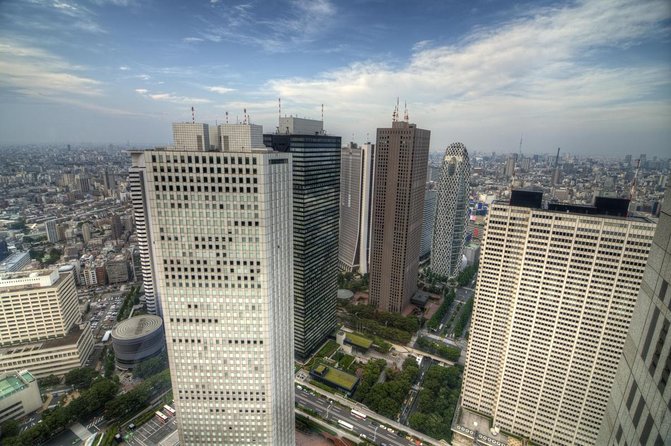
- Hanazono Jinja Shrine (since 1590) is a calm Shinto pause in the middle of Shinjuku.
- Golden Gai’s narrow alleys are the kind of place you’d miss on your own.
- Kabukicho neon streets give you that Tokyo night-photo energy, plus plenty of people-watching.
- Omoide Yokocho after-work alley vibes includes snack-bar time and then karaoke.
- Small group size (max 10) means the guide can keep things moving and answer questions fast.
- Carbon neutral, B Corp–certified operator adds a feel-good layer if that matters to you.
Why Shinjuku Nights Feel Easier With a Guide
Shinjuku is Tokyo’s busiest nightlife hub, and it can overwhelm you quickly. The main win here is that you don’t have to decide everything in advance or translate your way through menus while your night is already slipping away. You get a local English-speaking guide to keep the pacing smooth and help you land in places that match the mood of the hour.
Another plus is how the tour is structured around neighborhoods that feel different from each other. You’re not just “bar hopping” in the vague sense. You’re stepping through distinct zones: a shrine setting, then tiny historical drinking alleys, then neon Kabukicho, and finally the food-and-snack alley that locals use after hours. If you like your Tokyo nights to make sense as a story, this format fits.
The trade-off is also simple: this is built for nightlife venues, so you’re stepping into places where smoking happens, and you’ll be walking at night. If smoke bothers you, or if you prefer quiet, seated-only bars, plan accordingly.
You can also read our reviews of more tours and experiences in Tokyo.
Hanazono Jinja Shrine After Dark: Shinto in the Middle of Shinjuku
The tour starts at Hanazono Jinja Shrine, with the meeting point at the main shrine gate area (Shinjuku Sanchome / Hanazono Jinja). It’s free to visit, and that matters because it sets the tone without pulling your wallet into the night early.
Hanazono Jinja matters locally because it’s considered the shrine guarding Shinjuku, tied to merchants, craftsmen, and artists. You’ll also get context for Shinto practice, which is handy if you’ve only seen a shrine from the outside while rushing between subway stops. What really makes this stop special is the contrast: you’re in a major ward, surrounded by city noise and neon, yet the shrine grounds can feel more contained once lights come on.
If you’re the type who likes photos, go slow here. This is one of the best moments to get that “Tokyo after dark” look without it being pure street-party energy. And since the time is short, you won’t feel stuck while everyone else is already ready to move on.
Golden Gai’s Tiny Alleys: Where Nightlife Feels Personal
After the shrine, you’ll head into Golden Gai, a warren of very small alleys packed with tiny bars. This is one of those areas where Tokyo’s history shows up as a physical layout. The alleys feel intimate, and they’re part of Shinjuku’s counterculture story—especially the postwar and 1960s era when the area became a magnet for rebellious musicians, filmmakers, and avant-garde theater types.
Practical takeaway: Golden Gai is not “one big bar.” It’s dozens of micro-spaces. With a guide, you get time to understand what you’re looking at before you’re standing in front of a door that might be a simple entrance or might lead somewhere you’d never find alone.
You’ll spend about 20 minutes here. That’s long enough to get your bearings and short enough that you don’t feel like you’re waiting for something to happen. Also, it’s a good buffer before you hit the louder zones.
Kabukicho’s Neon Chaos: Photo-Friendly Energy With a Plan
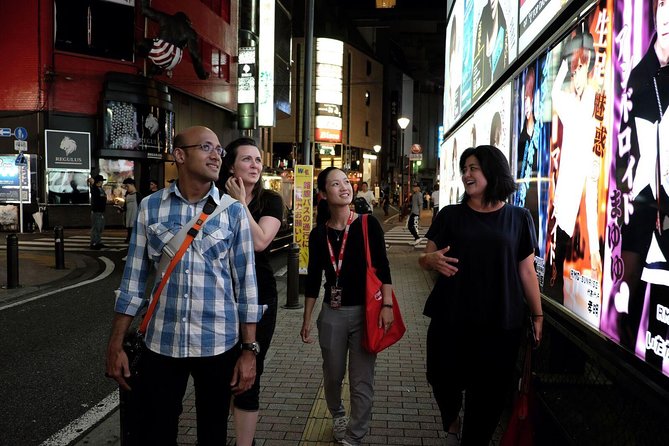
Kabukicho is the section of Shinjuku famous for nightlife density—tons of shops, restaurants, nightclubs, and karaoke. It can be visually intense in the best way: bright signs, music sounds everywhere, and people flowing in every direction.
The tour keeps this stop manageable. You’ll have around 15 minutes to take it in, including a well-known photo moment tied to the Godzilla statue area. This is one of the easiest places to burn time by accident, so I like that the guide puts a frame around it. You get the energy, the photos, and the atmosphere, without losing your place in the night.
One caution: Kabukicho is crowded. If you don’t enjoy pushing through crowds or you’re sensitive to noise, remind yourself you’re here for a quick look, not a long sit-down. Wear shoes you can move in comfortably and you’ll be fine.
Omoide Yokocho Snack Bars and Karaoke Nightcap
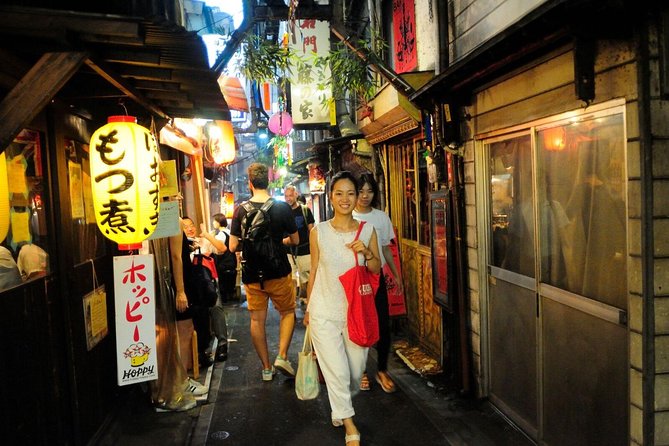
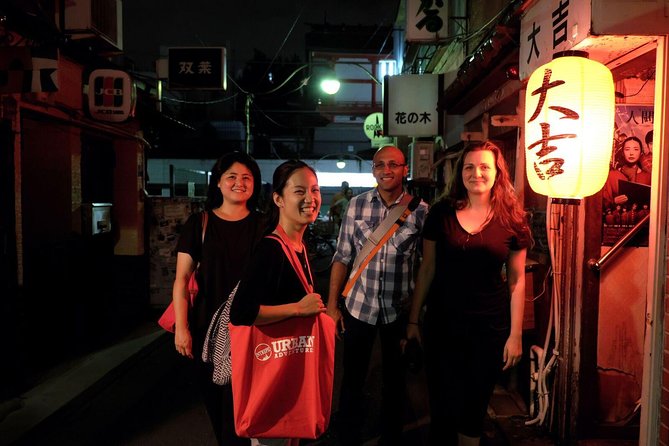
The last big experience block is Omoide Yokocho, the famous alley where you can find food, snacks, and late-night drinks. This stop is about 2 hours total, and it’s one of the most “Tokyo-local-night” parts of the whole evening. The vibe here is more about the alley atmosphere than about big venues.
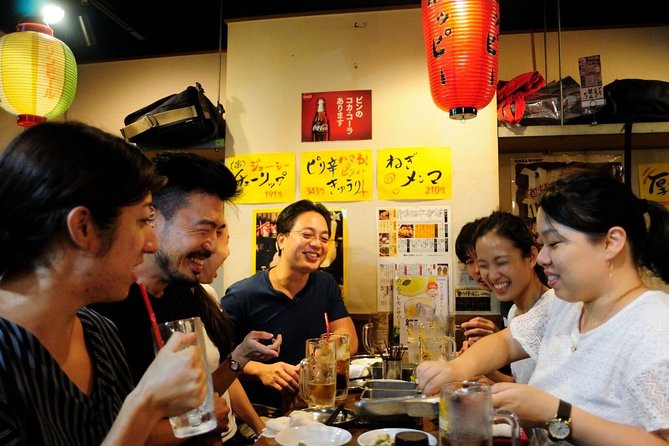
This is where you’ll pop into a snack bar-style place—think small, casual, after-work energy. The format fits the rest of the tour: you’ve been guided through history and neighborhoods, and now you get to act like you belong for an hour or two.
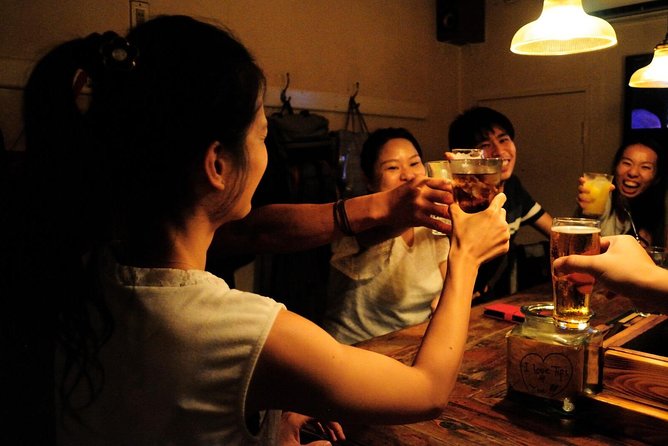
Then comes karaoke. Karaoke is included, and it’s a fun way to wrap up a night when you’ve already eaten and had drinks. Expect the experience to be practical and social rather than polished showtime. If you’re hoping for a huge loud-crowd karaoke scene, you might find the room vibe varies by group and location. One person noted their karaoke spot felt quiet, so if your idea of karaoke is a party, you’ll want to bring the energy yourself.

Food, Drinks, and the Happy Hour Flow
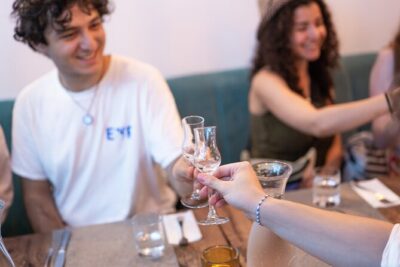
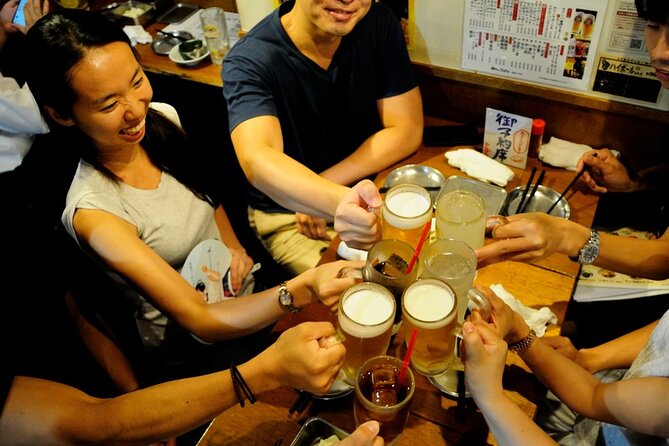
A big reason this tour feels like value is that it handles the “what should we eat?” problem for you. You’ll get three local food samples (bite-sized items like tempura and seasonal-style bites), plus three drinks with a cheers moment. Drinks can include sake or beer, depending on what the group does that evening.
I like that the food is sampled rather than turned into a full sit-down meal. In a 3-hour night plan, you can taste without getting stuck. It’s also a good way to learn what locals actually order in casual settings, because the guide can explain what you’re eating while you’re mid-bite instead of after you’ve already moved on.
This also helps solo travelers a lot. You’re not stuck eating alone at a random place you picked on the fly. You’re in a shared rhythm with your guide and small group, and the “kanpai” moment gives you a natural social opening.
One limitation you should know up front: vegetarian, vegan, or gluten-free options aren’t available on this tour. If you have strict dietary needs, this one may not fit.
Price Worth It? What $129.55 Buys You in Real Terms
At $129.55 per person for about 3 hours, you’re paying for four things at once: guided navigation, access to nightlife spots you’d likely miss, and multiple included extras (three food samples, three drinks, and karaoke). If you try to recreate the same night on your own, you’ll quickly spend money on drinks and karaoke anyway, and you’ll still be dealing with the hardest part—finding the right places at the right time.
This tour also caps at a maximum of 10 people. That matters. In a city like Tokyo, where walking times and train stops can erase momentum fast, a smaller group keeps the plan working. You’re not waiting around for a large crowd to catch up, and you’re more likely to get specific answers from the guide.
There’s also a sustainability angle: the tour is carbon neutral, and the operator is a B Corp–certified company committed to using travel as a force. If you care about that layer, it’s a plus that doesn’t cost you extra.
Who This Tour Fits Best (and Who Should Think Twice)
This tour is a strong fit for:
- Solo travelers who want nightlife without feeling like they’re improvising alone
- Couples who want an easy, structured evening with memorable stops
- Small groups of friends who want a guide-led route and then free time later (if you choose to continue after)
It’s especially good if you’re curious about culture and want more than just eating and drinking. The shrine explanation and Shinto context give the night an anchor that a lot of “party tours” don’t bother with.
It’s less ideal if:
- You’re very sensitive to smoke. The bars you visit allow smoking and there’s no separated non-smoking area.
- You need vegetarian, vegan, or gluten-free options.
- You want a quiet, low-energy night. This is a nightlife-focused route in busy districts.
Smart Tips for Meeting, Night Walks, and Getting Through Shinjuku
A few practical moves will make the start smoother.
First, plan your meeting like you would for a train transfer. The meeting point is at Hanazono Jinja main shrine gate area (near Shinjuku Sanchome). One person had trouble finding it even with GPS and ended up needing extra help to reconnect, so I’d do two things: save the meeting address and also zoom in on the exact shrine gate landmark on your map.
Second, dress and pack for walking. The tour involves moderate walking, and you’ll be moving through dense nightlife blocks. Comfortable walking shoes beat stylish shoes here.
Third, remember that the day-to-night shift matters. Start time is 5:30 pm, and you’ll go from shrine-light calm into progressively louder nightlife zones. If you take medication or get tired easily, pace yourself early so you don’t hit a wall right when karaoke starts.
Finally, bring your expectations for karaoke. One of the fun parts of the night is that karaoke is part of the “snack bar” style ending, not a separate formal show. If you’re shy, start by watching the guide’s lead and let the conversation and group energy do the work.
Should You Book Tokyo Shinjuku Nightlife Happy Hour and Karaoke Fun?
I’d book this if you want a structured Shinjuku night that mixes culture and nightlife in a way that’s easy to follow. The best reasons are the included food and drinks, the karaoke finish, and the guide-driven route through places like Golden Gai and Omoide Yokocho—areas that can feel confusing if you’re flying solo.
I’d think twice if smoke is a deal-breaker for you, or if you need vegetarian/vegan/gluten-free options. Also, if you’re hoping for a loud, high-energy karaoke crowd at every stop, keep in mind the karaoke vibe can vary by venue.
If you’re open to a fun, guided night out with local-owned spots and a small group size, this is a solid value way to see Shinjuku after dark.
FAQ
How long is the Tokyo Shinjuku Nightlife tour?
It runs for about 3 hours.
What time does the tour start?
The start time is 5:30 pm.
Where do I meet the guide?
Meet at the main shrine gate at Hanazono Jinja Shrine in Shinjuku Sanchome (the listed address is 5-chōme-17-3 Shinjuku, Shinjuku City, Tokyo 160-0022).
Where does the tour end?
The tour ends at JR Shinjuku Station (3-chōme-38-1 Shinjuku, Shinjuku City, Tokyo).
How many people are in the group?
The tour has a maximum of 10 travelers.
What food and drinks are included?
You’ll get three assorted local food samples and three drinks (sake or beer), plus a cheers moment.
Is karaoke included, and what setting is it in?
Yes. Karaoke is included, and it happens in a snack bar setting.
Are there vegetarian, vegan, or gluten-free options?
No. Those options are not available on this tour.
Is there a minimum age?
Yes, the minimum age is 20.
Does the tour involve places where smoking is allowed?
Yes. The drinking establishments allow smoking, and there are no separated areas for non-smokers.
What if the weather is poor?
This experience requires good weather. If it’s canceled due to poor weather, you’ll be offered a different date or a full refund.
Is free cancellation available?
Yes, you can cancel for a full refund up to 24 hours in advance.