REVIEW · LONDON
Booze, Brothels & The Bard: A Walking Tour of London’s Bawdy Borough
Book on Viator →Operated by Historic London Tours · Bookable on Viator
Southwark is London’s storybook of trouble. This 2-hour walking tour threads Shakespeare and Dickens through real neighborhood landmarks, from prisons and outcast burial grounds to the Globe Theatre. I like how the guide mixes sharp facts with a street-level tone that fits the place.
I also love the format: a small group (max 15) means you’re not lost in the crowd, and you can actually follow the stories as you move. Borough Market is one of my favorite stops here, partly because you get to pair the literary talk with something you can smell and taste right after.
The only tradeoff is time. You get quick looks at each landmark, so if you want a long museum visit, plan to circle back on your own.
In This Review
- Quick hit points before you go
- Why this Southwark walk feels different from the usual London sights
- Borough High St to St George the Martyr: starting at Marshalsea’s last trace
- Crossbones Graveyard and the Garden of Remembrance: outcasts, names, and silence
- The Hop Exchange: when beer trade history is still readable
- The George coaching inn: where travelers met Southwark’s energy
- Old Operating Theatre Museum and Herb Garret: medicine in a world of limits
- Crossing into London Bridge and Southwark Cathedral: big landmarks, serious mood
- Borough Market and Winchester Palace: food culture meets medieval power
- The Clink Prison Museum: the infamous name, in a real place
- Shakespeare’s Globe Theatre: closing the loop on writers and place
- Price and time: what you’re really paying for
- Who should book this tour (and who might skip it)
- Should you book Booze, Brothels & The Bard?
- FAQ
- What is the price per person for this walking tour?
- How long is the tour?
- Where does the tour start and end?
- How big is the group?
- Is admission charged at the stops?
- What is the cancellation policy?
Quick hit points before you go
- A literary-themed walk through Southwark’s harsh and human past
- Max 15 people, so the guide can keep it personal
- Every listed stop shows free admission, keeping your spend tightly focused on the tour
- Beer trade heritage at the Hop Exchange alongside major “London life” sites
- Dark history stops (Crossbones Graveyard, the Clink) paired with culture at Shakespeare’s Globe
- Ends right at Shakespeare’s Globe, making it easy to keep exploring nearby
Why this Southwark walk feels different from the usual London sights
Most London tours aim for big, postcard-famous highlights. This one goes the other way. It stays in Southwark, the part of London that historically sat close to the grime, the commerce, and the people who didn’t always get written into official records. Then it connects that reality to famous writers—especially Shakespeare and Dickens—and shows how literature grew out of places like this.
You’ll be walking at a steady pace for about two hours. The rhythm is “arrive, look, listen, move on.” That makes it ideal for getting oriented fast and still learning a lot, without demanding a half-day museum marathon.
I also appreciate the structure: the tour uses a chain of nearby landmarks, so you can build mental connections as you go. Prisons lead into outcast burial stories; beer trade echoes into old inns and markets; then you end at Shakespeare’s Globe, where the whole theme clicks into place.
If you want a single checklist of London “must-sees,” this isn’t that. If you want London to feel lived-in—messy, dramatic, and human—this works.
You can also read our reviews of more tours and experiences in London.
Borough High St to St George the Martyr: starting at Marshalsea’s last trace
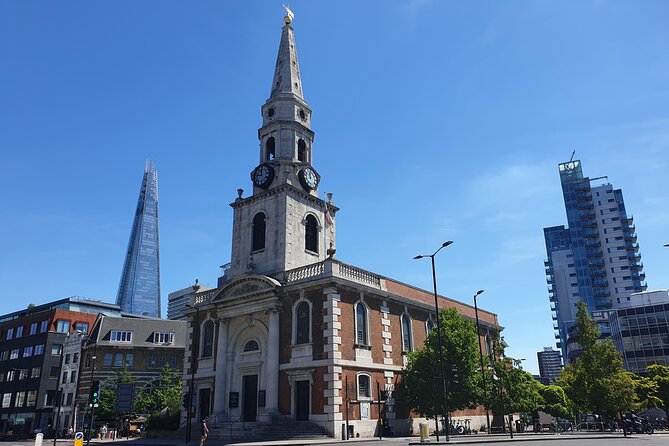
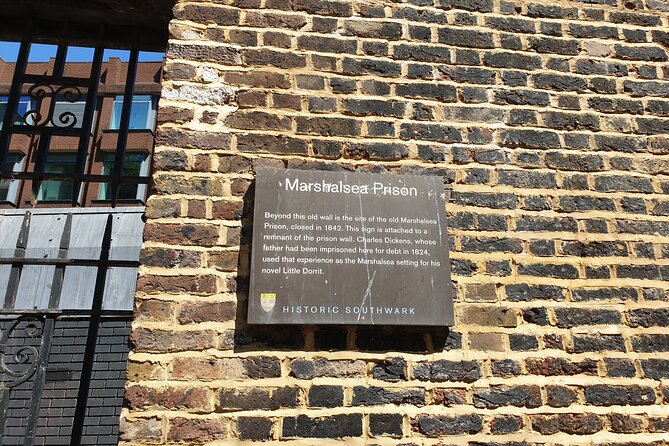
Your tour begins at Borough High St (SE1 1JX). Almost immediately, you’re placed at a site with real weight: St George the Martyr, noted as the only remaining part of Marshalsea Prison.
This is the kind of start that sets the tone. Instead of talking about the prison from a distance, you’re standing in the kind of physical reminder that makes history feel less like a textbook and more like a lived environment.
What I like about this first stop: it anchors everything to a specific place right away. That matters because the rest of the walk builds connections to people’s everyday lives—food, lodging, commerce, and writing—under the shadow of confinement and punishment.
One practical note: since this is a churchyard-adjacent location, dress for a walk and plan for a bit of standing and shifting your footing while you hear the guide’s explanation.
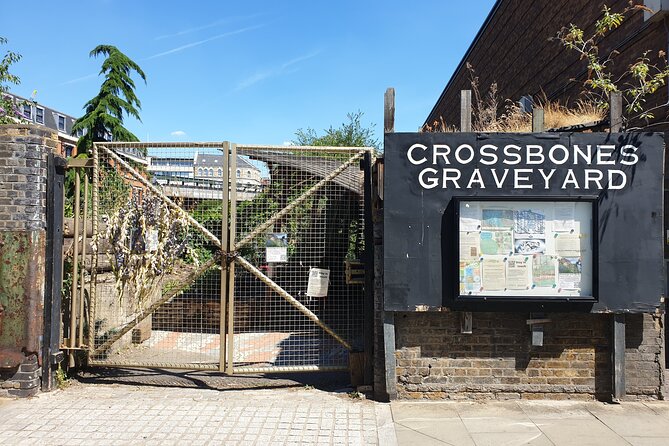
Crossbones Graveyard and the Garden of Remembrance: outcasts, names, and silence
From Marshalsea’s trace, the route moves to Crossbones Graveyard & Garden of Remembrance. This is described as the final resting place for thousands of Southwark’s outcast dead.
Even if you don’t come in with any background, the message is clear: this wasn’t the land of heroes and headlines. It’s where society pushed aside people it didn’t want to remember. Standing there forces a different kind of attention. You’re not just seeing an old spot—you’re confronting how communities decided who mattered.
This stop also pairs well with the tour’s literary thread. Shakespeare and Dickens didn’t just write about kings; they wrote about people at the margins. A graveyard like this gives you a sharper lens for the stories you’ll hear later.
Drawback to consider: it’s emotionally heavy compared to some London sights. If you’d rather keep your first morning light, take a breath here and then let the rest of the walk lighten the mood with markets and theatre.
The Hop Exchange: when beer trade history is still readable
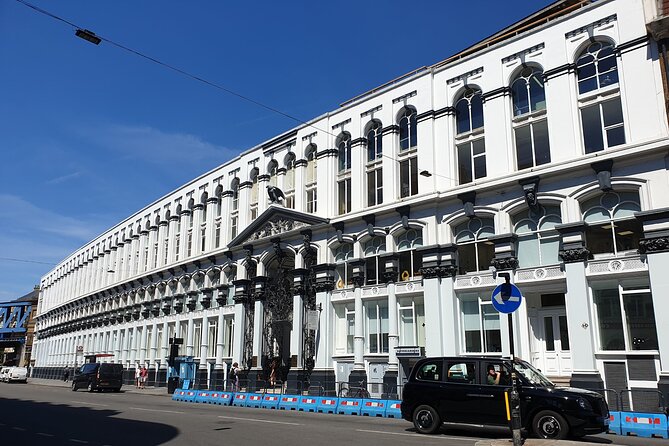
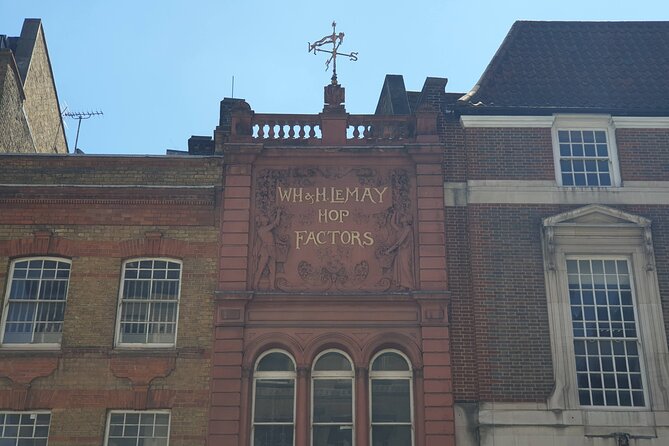
Next up is the Hop Exchange, described as the largest extant reminder of Southwark’s beer trade.
This is a great palate cleanser after prisons and outcast burials. You shift from punishment and social exclusion to work, commerce, and everyday drinking culture. It’s also a reminder that London’s big stories often start with small, practical industries. Beer is one of those industries that touches almost everything—money, labor, gathering places, and local identity.
What you gain here: a sense of how the neighborhood functioned. The guide’s stories about the area’s characters and the literary figures who watched society from street level make more sense once you understand the economic engine powering the streets.
The stop is brief (about five minutes), so you won’t have time for long photos. But it’s enough time to catch the building’s role and then move on with a clearer picture of Southwark.
The George coaching inn: where travelers met Southwark’s energy
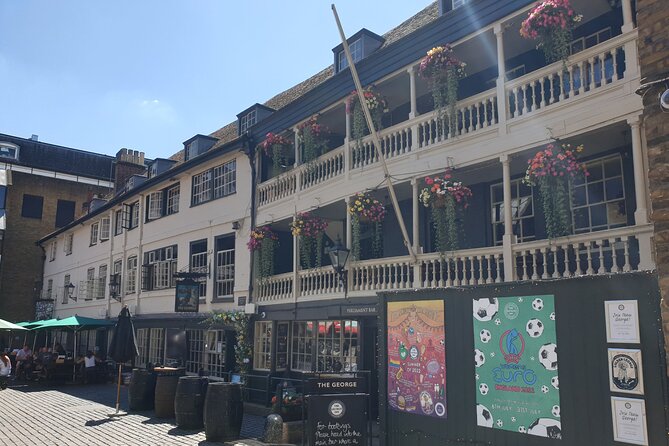
You then reach The George, described as London’s last surviving galleried coaching inn.
Coaching inns were practical hubs: places where people, mail, goods, and gossip could all intersect. Even in a short stop, this location helps explain why Southwark became such a magnet for stories. If you’re serious about the link between place and literature, these inns make the connection feel real. People passed through, stuck around, and returned home with whatever they’d seen.
Why this stop matters for you: it gives context for the tone of the walk. The tour isn’t only about darkness. It’s about the mix—trade, travel, lodging, and the characters who moved through the same streets.
This is also an easy spot to reset your mind before the tour shifts again into more unusual history.
Old Operating Theatre Museum and Herb Garret: medicine in a world of limits
After the coaching inn, the route takes you to the Old Operating Theatre Museum and Herb Garret, described as Europe’s oldest surviving operating theatre.
This is one of those stops that changes how you think about “old times.” Instead of grand architecture or royal romance, you see a human system built around illness and limited options. The “herb garret” detail is especially useful in understanding why medical care wasn’t separate from everyday plants and remedies.
I like that this stop turns the tour into more than gossip. You’re still staying in the “real London” lane, but the subject matter widens—people got sick here, treated here, and the city’s identity included those hard realities.
Consideration: this is also a museum-type topic, so if you’re sensitive to medical themes, you may want to mentally prepare for a more serious explanation than at the market or inn.
Crossing into London Bridge and Southwark Cathedral: big landmarks, serious mood
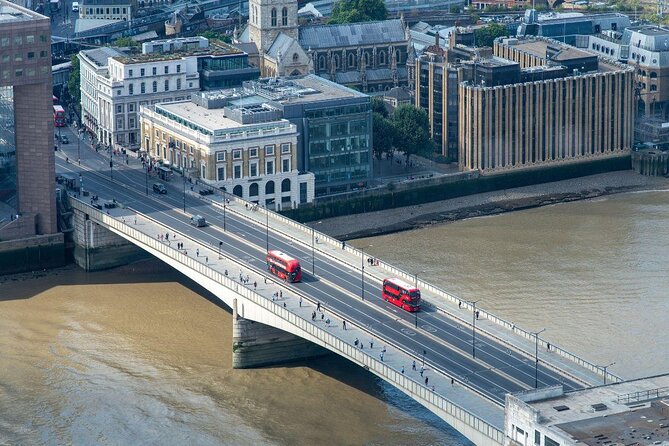
The walk continues to London Bridge, one of the city’s best-known icons. Then you head to Southwark Cathedral, described as London’s oldest surviving gothic church.
This pairing works because it balances scale. London Bridge is instantly recognizable and helps you connect the neighborhood to the wider city. Southwark Cathedral then brings it back into a specific Southwark identity—longstanding, architectural, and anchored.
If you’re a photo person, this is where you’ll likely pause and frame shots. If you’re more into listening, it’s where the guide can help you hear how religious buildings, civic geography, and daily life overlap.
Small caution: since these are major sites, sidewalks can be busier around them. Stay close to your guide’s group pace so you don’t get separated at the transition points.
Borough Market and Winchester Palace: food culture meets medieval power
Next comes Borough Market, described as a food market with one thousand years behind it.
This is one of the most enjoyable moments on the route. Even though the stop is short, the market setting gives you an immediate sense of London’s continuity. It’s one thing to hear about historic trades; it’s another to stand somewhere where food culture has kept returning, generation after generation.
Then you’ll move to Winchester Palace, described as the remains of one of England’s most prestigious medieval homes.
That contrast is clever: market life (people feeding themselves) alongside elite residence remains (people trying to dominate the social order). For me, it’s a reminder that Southwark contained both ends of the spectrum, and the same streets can hold multiple layers of meaning.
Tip for your timing: Borough Market is the kind of place where, after the tour, you may want to grab a snack and keep walking at your own pace. If you plan to do that, bring a little extra time beyond the two-hour window.
The Clink Prison Museum: the infamous name, in a real place
From the medieval residue of Winchester Palace, the route heads to the Clink Prison Museum. This is described as the site of the notorious Clink Prison.
Clink is a name you’ll likely recognize even if you don’t know all the details. Here, the value is less about trivia and more about atmosphere. You’re seeing how punishment and the city’s public reputation intertwined. A “notorious” prison is a story engine: people talk, rumors spread, and writers pull at those threads.
This stop also strengthens the tour’s title theme without pretending history was simple or polite. It shows the underbelly in a tangible way, then uses the literary connection to explain why writers kept returning to the darker corners of city life.
Emotional consideration: it can feel intense compared with the market. If you’re the type who prefers lighter topics earlier in the day, just know this part comes before the walk’s final cultural payoff.
Shakespeare’s Globe Theatre: closing the loop on writers and place
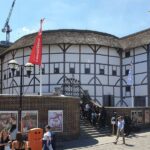
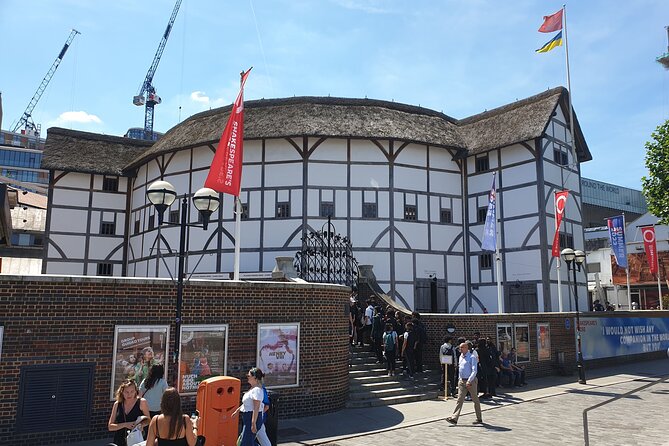
Finally, you finish at Shakespeare’s Globe (the end point is Shakespeare’s Globe, 21 New Globe Walk, SE1 9DT). The tour highlights the reconstruction of Shakespeare’s Globe Theatre.
This ending makes sense, because you’ve spent the full walk connecting literature to real settings: prisons, commerce, outcasts, travel inns, and everyday community spaces. By the time you reach the Globe, Shakespeare isn’t floating in the abstract. You can imagine his characters moving through a London like this.
If your tour guide is someone like Tom, you’ll likely get a lot of color in the stories, with a clear, energetic delivery that keeps the walk fun while still grounded in specific locations. The route’s end point lets you keep the experience going too—whether you want to take photos, read, or simply hang around the theatre area after the walking portion ends.
Practical move after the tour: if you want to learn more at one of the stops, choose the site that pulled you most. The tour itself is designed more for orientation and context than for long museum time.
Price and time: what you’re really paying for
The tour costs $27.78 per person and runs for about 2 hours. The value here isn’t just the route—it’s the fact that you’re paying for guided storytelling that links the places together.
There’s also a hidden advantage: the listed stops show free admission. That means your money isn’t going to multiple entrance fees. Instead, you’re mostly funding the walk guide who helps you connect what you’re seeing to why it matters.
The tradeoff is the pace. With many stops described in short windows, this is a “see it, understand it, move on” tour. You’ll likely spend more time standing and listening than you would in a standalone museum.
That’s not a bad thing. It’s ideal if you want a smart half-day plan that doesn’t trap you for hours in one building.
Who should book this tour (and who might skip it)
This is a strong fit if you:
- Want a different London angle than the standard royal monuments loop
- Enjoy literature tied to real places, especially Shakespeare and Dickens
- Like small groups and want a guide who can keep the story line moving
It may be less ideal if you:
- Want lots of museum time or long indoor visits
- Prefer gentle, family-friendly stops only
- Get impatient with quick photo opportunities and short scene-setting moments
If you’re doing London as a first-timer, this can also work as a “set the stage” walk. It gives you a mental map of Southwark that makes later independent exploring feel easier.
Should you book Booze, Brothels & The Bard?
I’d book it if you want London with edges. The route takes you through places most visitors rush past—or don’t notice at all—and then stitches them into stories about writers who watched society closely. The small group, two-hour length, and free-admission stops make it feel like efficient value.
I would not book it if you’re hoping for long, slow museum exploration or a strictly upbeat itinerary. This walk has a darker spine, and you’ll feel that at the prison and graveyard stops.
If you’re the kind of traveler who loves learning where the characters come from—who wrote, who suffered, who sold beer, who travelled, who got remembered—this tour is a good match.
FAQ
What is the price per person for this walking tour?
It costs $27.78 per person.
How long is the tour?
The tour lasts about 2 hours.
Where does the tour start and end?
It starts at Borough High St, London SE1 1JX, UK, and ends at Shakespeare’s Globe, 21 New Globe Walk, London SE1 9DT, UK.
How big is the group?
The tour has a maximum of 15 travelers.
Is admission charged at the stops?
The stops listed on the route all show admission ticket as free.
What is the cancellation policy?
Free cancellation is available up to 24 hours in advance for a full refund. If you cancel less than 24 hours before the start time, the amount you paid will not be refunded.