REVIEW · KYOTO
Kyoto: Maiko Happy Hour at a Historic Machiya
Book on GetYourGuide →Operated by Tondaya, Co., Ltd. · Bookable on GetYourGuide
Kyoto gives you maiko access on purpose. This 2-hour visit pairs a tour of a 140-year-old machiya with a live maiko tea ceremony and refined dance in the same preserved wooden setting.
What I really like is the way the evening connects Kyoto’s street-level everyday architecture to the highly formal world of maiko arts. I also like that you don’t just watch; you get to interact—ask questions, play party games, and take photos when maiko are usually off-limits.
One possible drawback to keep in mind: this is a short, tightly scheduled experience at a premium price. If you’re hoping for long performance time, a full meal, or very detailed English during every moment, you might feel the timing and translation could limit how much you absorb.
In This Review
- Key highlights worth your attention
- Inside Tondaya’s machiya: the room sets the mood
- The maiko tea ceremony: etiquette in real time
- Buyō dance in a Kyoto townhouse: watch how precision travels
- Maiko party games: the social part people remember
- Photos, questions, and the rare access factor
- Kyoto Maiko Happy Hour pacing: what the 2 hours really means
- Price and value: why it costs $709 (and when it doesn’t)
- Translation and timing: the two things you can control
- Who should book this Kyoto maiko experience
- Before you go: socks, simple expectations, and comfort
- Should you book it?
- FAQ
- Where do I meet for the Kyoto Maiko Happy Hour at Tondaya?
- How long is the experience?
- What is included in the experience?
- Do I need to bring anything?
- Are alcoholic drinks included?
- Is the experience suitable for wheelchair users?
Key highlights worth your attention
- A 140-year-old machiya, officially recognized: Tour a nationally/city-designated cultural landmark with preserved details and real stories.
- Tea ceremony with Uji matcha and sweets: A maiko-hosted moment that’s more about grace and etiquette than food quantity.
- Buyō dance with classical music: Watch a refined traditional dance form in a room built for quiet drama.
- Party games plus Q&A time: The maiko explains how games work and gives you a chance to ask about maiko culture.
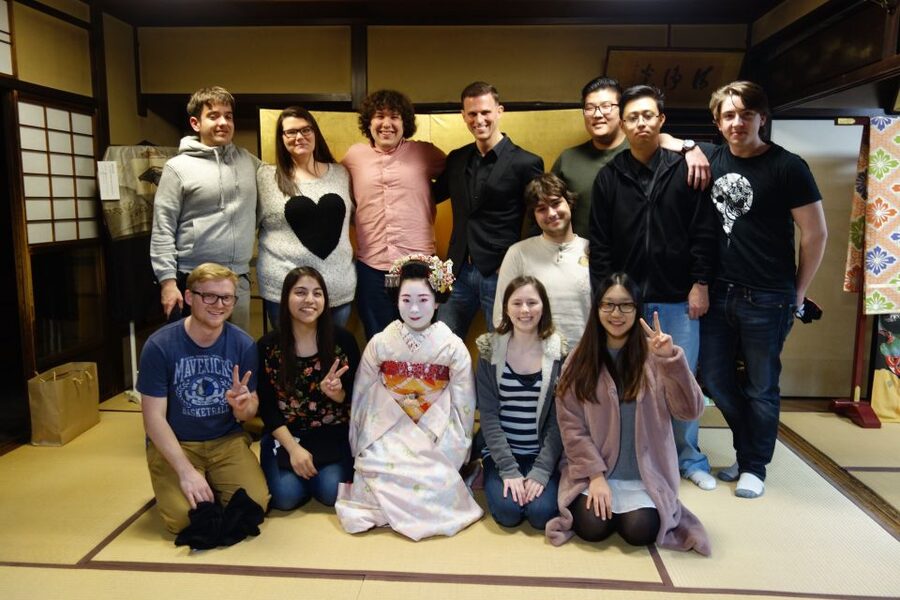
- Rare maiko photo opportunity: You can take commemorative photos together, something maiko typically don’t do with the public.
- A guided culture lesson: You get a quick orientation to Kyoto and maiko culture woven into the program.
Inside Tondaya’s machiya: the room sets the mood
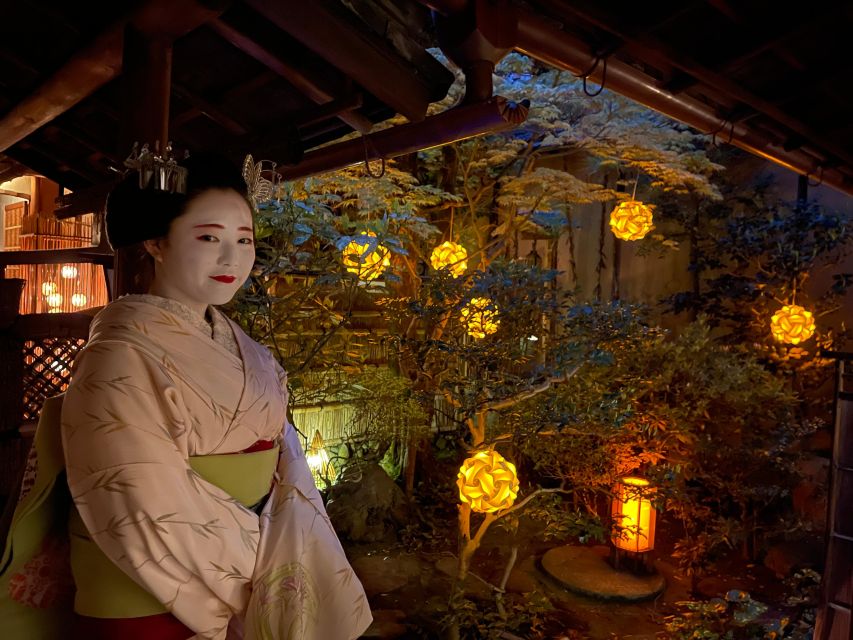
Most Kyoto “culture experiences” happen in places that feel like a showroom. Here, the core of the event is the building itself: Tondaya-Nishijin Japanese Cultural Experience Museum, a 140-year-old machiya (traditional Kyoto townhouse) that’s been recognized as a culturally significant landmark.
A machiya isn’t just old wood. It’s a living design system for everyday life—sliding doors, layered spaces, and the kind of layout that makes performances feel closer than they should be. During the guided walkthrough, you’re led through the historically valuable artifacts and stories attached to the property. That matters because maiko culture isn’t floating in space; it grew up alongside the architecture and rhythm of Kyoto’s entertainment districts.
I like that the tour is not an endless lecture. It’s a warm-up that helps you look at what you’re seeing with calmer eyes before the dance begins. You’ll get context for why the arts feel so precise later on.
The maiko tea ceremony: etiquette in real time
After the machiya tour, the tone shifts. You’re introduced to an authentic maiko who performs a tea ceremony and serves Uji matcha and Japanese sweets.
Here’s the practical value for you: a tea ceremony can feel mysterious if you only know the broad idea. In this format, you’re not left to guess what’s happening. You get to watch the movements as a cultural performance, in the setting that matches its style. The matcha and sweets are part of the ritual, but the main point is learning how formality works—timing, posture, and respectful attention.
Expect the ceremony to be part of the program, not a long standalone session. Some people come in thinking it will feel like a full, slow tea lesson. Others are happy because it keeps the focus on atmosphere and performance. Either way, the ceremony is your first close-up look at how maiko presence blends art and social grace.
And don’t miss the setting. You’re inside a preserved wooden townhouse, where the details you saw on the tour start to make sense. That helps the tea ceremony land as something grounded, not staged.
Buyō dance in a Kyoto townhouse: watch how precision travels
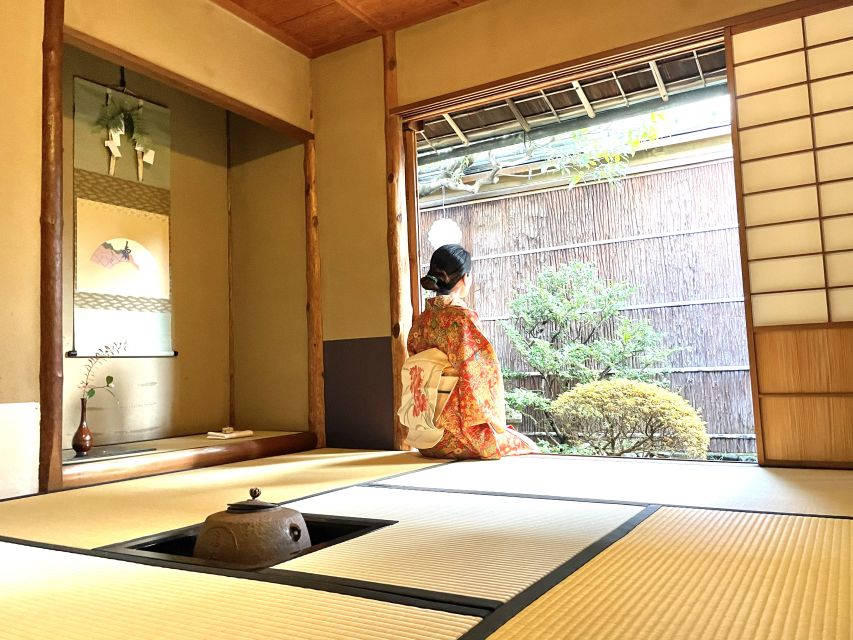
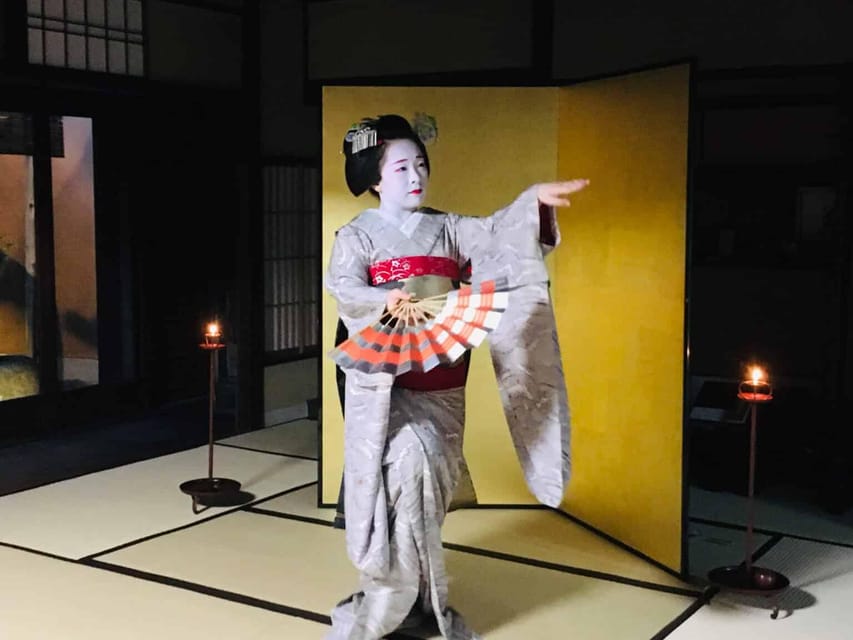
Next comes buyō, a refined traditional dance form accompanied by classical music.
This is where the evening becomes more than a history stop. Buyō isn’t about big, flashy movement. It’s about controlled expression—hands, shoulders, timing, and the way the dancer holds a moment just long enough for you to notice the meaning. In a machiya, you can’t hide behind distance. The room makes the performance feel intimate and focused.
If you’re the type who likes to understand what you’re seeing, this is a good match. You’ll be watching an art style that relies on discipline more than spectacle. You also get the “late Edo period in spirit” feeling the program aims for—Kyoto’s entertainment arts framed by a building that resembles the kind of spaces where this culture was performed.
Potential drawback: since the whole experience is 2 hours, the program can’t stretch. The buyō performance is a highlight, but it’s still part of a packed sequence. Come ready to enjoy it for what it is—a beautifully placed moment—rather than expecting a long evening of dance.
Maiko party games: the social part people remember
After the performance, you get a chance to join the fun through maiko party games. The maiko explains how each game is played, then you practice together.
This section is surprisingly valuable if you care about culture that’s interactive. It’s not just a photo op and not just a show. The games create a bridge between formal performance and real human conversation. You’ll also have time for questions about maiko culture while you’re playing.
I also appreciate the tone here. The maiko isn’t just giving a public lecture. You’re in a shared activity, so your curiosity becomes part of the moment instead of something you hold in until the end.
When the program turns toward photos, that’s another reason the party-game portion matters. It sets the stage for why the maiko photo time feels special rather than awkward. Maiko are generally not permitted to take photos with the public, so when the rules allow it for this event, you’ll want to be ready—smile, follow cues, and take your shots without overthinking.
Photos, questions, and the rare access factor
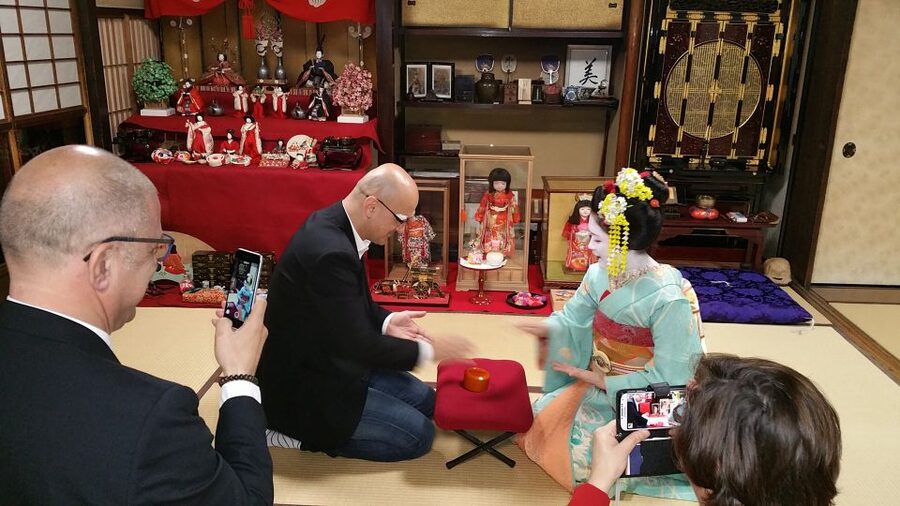
The event ends with commemorative photos with the maiko.
From a visitor’s standpoint, this is the “price-of-admission” moment. Regular maiko encounters are hard to arrange, and close public interaction is limited during training. This program is built around an unusual permission to meet closely, talk, and take photos.
If you’ve ever felt frustrated by Kyoto’s formality—where you can admire the look but struggle to connect—this is the opposite approach. You get structure: a clear sequence, time for questions, and a photo window designed specifically for memories.
My advice: use that time intentionally. Ask one or two good questions, then commit to photos. If you try to cram a long conversation into the photo moment, it turns stressful fast. Keep it simple.
Kyoto Maiko Happy Hour pacing: what the 2 hours really means
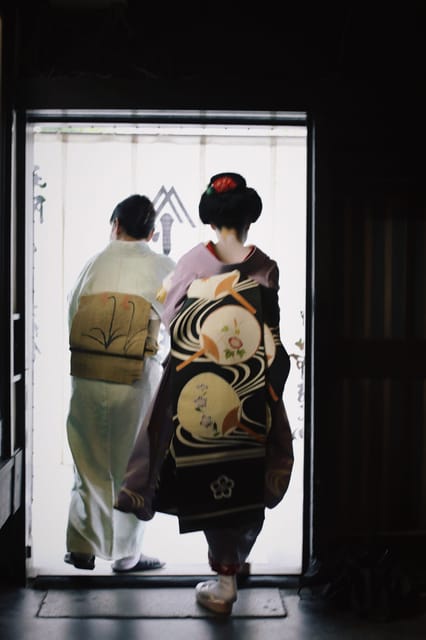
Everything runs in about 2 hours, and that pacing is a big part of whether the value feels right for you.
Here’s the arc you’ll experience:
- Guided tour through the machiya (with stories and artifacts)
- Maiko tea ceremony featuring Uji matcha and Japanese sweets
- Buyō performance with classical music
- Maiko party games and Q&A time
- Photography time with the maiko
- A short lesson on Kyoto/maiko culture
So yes, you’re getting multiple components. But you’re also getting them in a compressed timeline. If you’re someone who wants slow, layered instruction—extra time to observe, ask follow-ups, and soak in details—you may wish for more hours.
Also note what’s not included: alcoholic drinks are not part of the program. One reason this matters is that some people book thinking “happy hour” means beverages and a longer party vibe. The event is more accurate as a cultural hour-with-performances. It’s designed around traditional arts and etiquette, not drinks.
Price and value: why it costs $709 (and when it doesn’t)
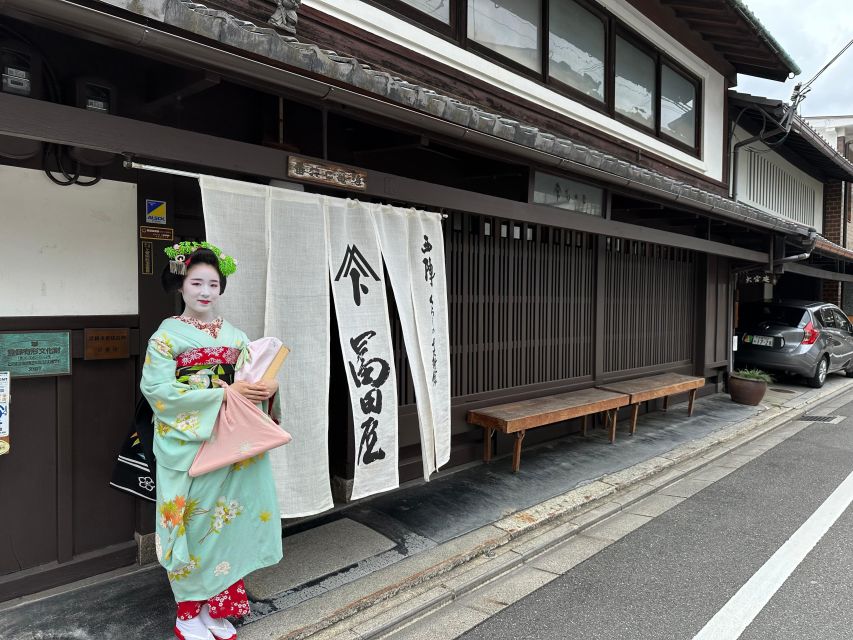
At $709 per person, this experience is not “cheap Kyoto.” It’s a premium, and the question is whether you’re paying for a type of access you can’t easily buy elsewhere.
You’re paying for at least three expensive things:
- The use of a 140-year-old cultural landmark as an active performance space
- A live maiko and a structured program that includes dance, tea ceremony, and interactive games
- The added rarity of photo access, which isn’t typically offered to the public
If your top goal is meeting a maiko in a setting where you can actually interact and take photos, the price starts to make sense. In other words: you’re not just buying a show ticket. You’re buying access to a controlled, respectful “behind-the-scenes” window that most visitors can’t arrange on their own.
If your goal is mostly photos, you might still feel it’s worth it—but only if you’re okay with the time limit and the fact that the tea and sweets are part of a ritual, not a full meal.
One more realistic warning: language support can affect how much value you feel you got. The program includes a live tour guide in Japanese, English, and Chinese, and translation arrangements can involve an interpreter and sometimes a translation device. If translation support doesn’t land well at any step, the charm of tea etiquette and dance nuance can shrink fast. That’s not the fault of the art; it’s just how comprehension works.
So I’d judge the value like this: if you’re prioritizing maiko access and performance in a historic machiya, you’ll likely feel the money goes toward the right things. If you’re hunting for a long, drink-friendly evening or a heavy meal, you may feel underwhelmed.
Translation and timing: the two things you can control
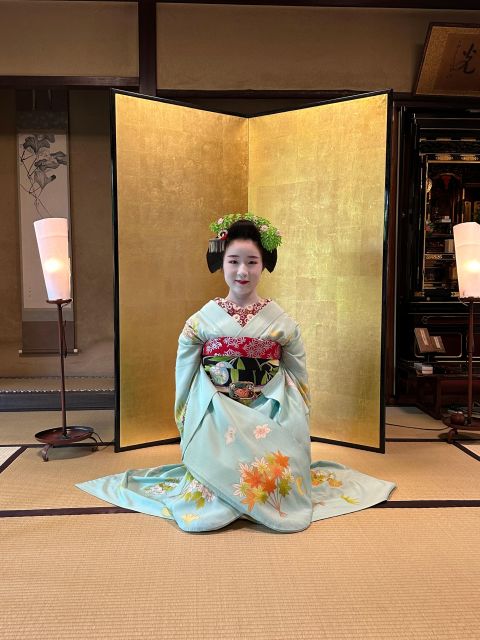
Language is the biggest “soft variable” in this kind of experience. The staff are experts in traditional arts, and while not all staff may speak English, the operator says they’ll try to arrange an interpreter, and a translation device may be used when needed.
Here’s what I’d do to protect your experience:
- Arrive on time. Late arrivals reduce how well staff can manage pacing and translation.
- If you have specific questions about maiko culture, think of a few ahead of time so you can get your point across quickly during Q&A.
- Keep expectations realistic about how every nuance will be explained. Even with excellent translation, some meanings in arts and etiquette come from watching closely.
Timing matters too because the program is only 2 hours. That’s why you should mentally prepare for a sequence: tour, tea ceremony, dance, games, photos—done, then finished. Treat it like an organized performance night rather than an open-ended cultural hang.
Who should book this Kyoto maiko experience
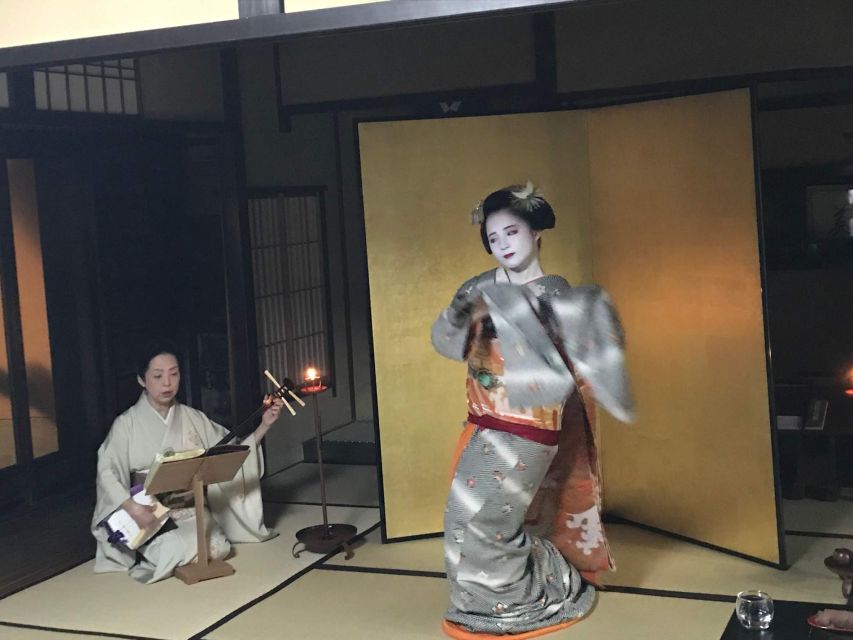
This fits best if you:
- Love Kyoto traditions and want them in a real preserved setting, not a generic stage
- Are excited by maiko culture and want access to ask questions
- Want a calm, respectful atmosphere where dance, tea, and social games happen in one flow
- Value rare photo access and want commemorative time with a maiko
It may not fit if you:
- Need wheelchair accessibility (the experience is not suitable for wheelchair users)
- Want a long event, lots of food, or alcohol included
- Are very sensitive to translation gaps—because if you lose the thread, the program can feel chaotic even if the content is good
Before you go: socks, simple expectations, and comfort
There’s one very practical item: bring socks. You’ll want to wear socks, and you should avoid stockings.
Also remember the basics that can affect availability:
- The venue is closed from December 31 to January 1
- Appointment timing with a maiko can be restricted from December 29 to January 10
- The maiko requires advance reservation at least ten days ahead, and the experience follows a strict non-refundable rule unless that timing threshold is met
I’m not listing that to scare you. I’m listing it so you don’t build your entire holiday around a single booking you can’t adjust.
Should you book it?
I’d book Kyoto: Maiko Happy Hour at Tondaya if your dream night includes a live maiko, a machiya setting, and an event that lets you interact through tea ceremony, buyō dance, and games, with the bonus of photo access that’s hard to get elsewhere.
I wouldn’t book it if you mainly want a long “party” with lots of food and drinks, or if you need maximum English detail at every moment. The experience is premium and structured, and for best value you have to match your expectations to that format.
If you go in with the right mindset—quiet attention for the tea, focus for the dance, and a relaxed attitude during the games—you’ll likely come away with more than photos. You’ll come away with the feeling of Kyoto’s formal traditions meeting real people, inside a historic townhouse that still knows what it’s for.
FAQ
Where do I meet for the Kyoto Maiko Happy Hour at Tondaya?
Meet at Tondaya-Nishijin Japanese Cultural Experience Museum.
How long is the experience?
The duration is 2 hours.
What is included in the experience?
It includes a guided tour of the machiya, maiko dance performance, party games, a tea ceremony, photography opportunities, and a lesson on Kyoto/maiko culture.
Do I need to bring anything?
You need to bring socks. You should not wear stockings.
Are alcoholic drinks included?
No. Alcoholic drinks are not included.
Is the experience suitable for wheelchair users?
No, it is not suitable for wheelchair users.